

@Thef-Maria I will try to clarify what I feel about "Liliandil" as you asked me to do. Though, just like you, I don't really like that name. Lilian would be fine enough. The "dil" suffix only makes her look like a "dill", which is not really the case, even in Narnia, where she was considered wise.
C.S. Lewis was known to be an Anglican or Church of England, the very Christian denomination into which I was born, and to which I adhere. This is no place to go into how the Protestant Anglican Church split from Roman Catholicism, which, nevertheless, is still a Christian trinitarian denomination which still reads the gospels, St Paul and the 5 first books of the Old Testament, called the Pentateuch but also originally known as the Jewish Torah. One Catholic concept that I find useful would be The Seven Deadly Sins, traditionally, Anger, Greed, Lust (Desire), Pride, Gluttony, Envy and Sloth. Obviously, there would be the Seven Opposing Virtues, which, according to Wikipedia, are also called the seven lively virtues of chastity, temperance, charity, diligence, kindness, patience, and humility. That is slightly different from the seven heavenly virtues which combine the four cardinal virtues, of prudence, justice, temperance, and fortitude with the three theological virtues of faith, hope, and charity.
If I were to assign a deadly sin as a theme for The Silver Chair, I would assign Sloth and its opposite, Diligence, otherwise known as Fortitude or Perseverance. This is the book where we see the death of Caspian's Queen, & its ramifications. Caspian's Queen was greatly beloved by her husband, son & the humans & talking animals who lived in Narnia. She wouldn't get that sort of acclaim if she hadn't been considered "wise, gracious and happy" as she was described in that book. So, she must have been doing something right to deserve it. The account, by the way, is in the Parliament of Owls chapter - how appropriate for an ideal Narnian government.  Yes, I see you agree with me that being Consort is a distinctly different job from being the Monarch, being mainly in support of the monarch one is married to, whether it is Liliandil, Queen Camilla, or even King Miraz' Queen Prunaprismia, whose very name conjures up school lessons where we were supposed to learn to speak like BBC correspondents relaying the News, and which I wouldn't see as "romantic", quite frankly, however the owner ended up with Miraz, excepting maybe in fun.

@thef-maria Look, I get that many people said that indeed he didn't intend for romance in his stories but I start realizing I have to either focus on my fanfic to rant about this through storytelling or focus on Aravis' and Cor's story, his short romance with Suspian because I'm sort of tired of responding to the same arguments.
The trouble with being a Consort, is that it doesn't stop for a moment. It isn't like Cinderella going to the ball, marrying her Prince & then "living happily ever after". Contrary to a Disneyesque Princess movie, in real-time history, there was more than one Princess or Queen who ended up with a nasty marriage breakdown, & not only in Great Britain, either. Nicking off from one's husband's side to have a holiday from being in the public glare at all, even if it is as innocent as Liliandil's "maying" could be considered as slothful or lazy, when her job is to remain, & to be seen to remain employed as her husband's support & "offsider" to use an Australian term. Your view, as I understand it, deplores Liliandil's prior lack of worldly experience & finds her rather dull for a "shipboard romance", but sorry, I can't quite agree, from my own experience of life, having been married for nearly 55 years, to a man still moaning about such a "shipboard romance" which ended in tears, long before he met me when I was only 21. 
When I was just a month short of my 16th birthday, I went with classmates to a club meeting, where the president of that club's ambition was to become the Prime Minister of Australia, according to other club members who regarded that ambition somewhat sceptically. He was a pleasant looking bloke but wore funny, ugly little boxes on each of the legs of the spectacles he wore. He was easy to talk to, and I got the impression he rather liked me. But seriously, I couldn't get involved with him, more than just meeting him, because I had a Leaving Certificate to do, and to tell the truth, who really wants to be a famous person's wife, always in the public eye? Having everything about one's family; state of health & upbringing, being discussed to the nth degree? Eventually, that young man, who had endured a childhood illness which damaged his hearing, did actually get to be Prime Minister of Australia, from 1996 to 2007. Without his perseverance in wearing those ugly little boxes back in 1963, he never would have achieved a high enough pass in the Leaving Certificate to earn a scholarship to university, let alone leave it with a degree in Law & eventually be put in such a lofty career position.
Similarly, Eustace, Jill & Puddleglum's perseverance in Silver Chair, enabled them to eventually find Prince Rilian, just in the nick of time, though with much help from Aslan. I don't think leadership could ever be considered easy, even in Narnia. And getting back to Ramandu's daughter, her father wasn't the only star retired or exiled to an island in the utter East. Coriakin, the Magician, another ex-star, whose book Lucy read in VDT to free the Dufflepuds, might well have a tale to tell as well. Rilian's grief for his mother & what it led to also mirrors C.S. Lewis' own "disenchanted" experience in life.
This post was modified 3 months ago 11 times by waggawerewolf27
Posted : December 13, 2025 8:23 pm
DavidD and Thef Maria liked

@waggawerewolf27 I think I've come to understand better your point of view because you seem to be much older than me, no offense at all I just understand it because you've said you've been married for 55 years since you were 21 which makes you 60+ (I guess). Talking about how things were 55 years ago, opens a whole new world ahead of us because your point of view comes from a life experience many decades ago where perhaps not even my parents existed.
I'm 21 right now now but I do recall my grandparents' stories and yes I can understand that the type of romance Caspian and Ramandu's Daughter have (which was written in the 50's, the time where my grandparents lived), could be more appreciated. I don't know the whole story of you and your husband although from what I've gathered you and him had a rather good love story, truly compelling and I think that if the love story you described was in comparison to Caspian and Lilliandil, the second would hit rock bottom.
My grandparents knew each other for a couple of years before they married and although it was sort of arranged my grandma was lucky to find him, because he indeed was a very good husband, good father and was ver committed to his work. My dad and uncle are very good people today. But that doesn't mean every marriage of that type back then was happy. I'd even argue that besides my grandmother, every other old couple in my village was miserable. The same type of romance back then, this one at first sight and then marriage because the girl's pretty always had me eye roll because I probably grew up with Rapunzel and Esmeralda as disney princesses and have very special standards.
What I do know about that particular time period (50's - 60's) is that the archetypes for female characters in storytelling was like this, mostly a bit passive, all kind and pure fair ladies like Ramandu's Daughter but it was in a timeline where women's position had been a little more questionable and very debatable. Susan and Lucy as characters aren't that archetype thankfully. This archetype came from the idea that a woman must seem all positive kind, pure and singing happy, thus the old Disney fils which aren't my favorite at all. In a few words, I may highly dislike Ramandu's Daughter because I hate this archetype in particular, you know the blonde always kind and pure lady that princes fall for and marry at first sight (ughhhh). My opinion is that I hate this archetype, but not everyone has to agree.
I might came to dislike it more and notice that my generation is as well disliking this type of archetype. The way we grew up is wayyy more complicated and messy. This wonder, innocence that was back in the 50's was already missing in my growing years and the way media, books and everyone portrayed female characters is way more complex, different and various, I don't even think we have archetypes. I don't say that there is an ideal type of lady in every storytelling today, I simply believe that my generation grew up with way different standards where in our eyes, purity and all the way kindness isn't as much as appreciated, we sort of as well find it cringe. And that is why my generation prefers Caspian with Susan because Lilliandil as a character isn't appreciated from people that have lived in such a complicated generation and can somehow understand complex characters as Susan and Aravis. Also, knowing guys my age the type of girls that actually attract them is Malenia from Elden Ring, if you know you know. Back then we all appreciated purity, now we appreciate complicity. And if the two of us come from two entirely different generations I can completely understand where you're coming from. Narnia is still highly appreciated but not for the same reasons and I think that's okay.
In my teen years I always had a crush on Caspian, especially from the movies but I'd definitely not mind Susan or a similar woman as his queen. I hate Lilliandil as a short and shallow character for Caspian who is so well developed and very flawed. I wouldn't mind if Lilliandil existed all by herself but I do mind that she's the queen to the most interesting structured character in the entire series. In my Narnia fanfic Lilliandil indeed marries Caspian but their "romance" exists not as a romance to be idolized but for a special reason. Their bond spark the anger and jealousy of a very important character of mine (Ellita) that from Caspian's rejection for Lilliandil creates jealousy, anger and hatred she has felt she takes up her path to become a queen of Narnia and a powerful monarch. Although years ago I wanted to avoid the canon romance in my story I then realized, why not make actual use of it. Today I'm still working on it.
Topic starter
Posted : December 14, 2025 12:06 am
DavidD liked
@thef-maria In my teen years I always had a crush on Caspian, especially from the movies but I'd definitely not mind Susan or a similar woman as his queen. I hate Lilliandil as a short and shallow character for Caspian who is so well developed and very flawed.
I wonder if you have read all 7 Narnian books, as well as watching the Walden movies? Or by any chance, have you seen some other filmed productions such as BBC's Narnia television series, from 1988 to 1990, where you might very well see a very different Susan depicted. @courtenay has said elsewhere on NarniaWeb that Susan in the book was the last to see Aslan and seemed always to be hanging back, almost dreading being back in Narnia, even if it was her own horn that had drawn them there from a railway station.
That isn't so surprising when in the book, The Horse and his boy, Queen Susan of Narnia was actually depicted as a young woman, deciding whether or not to marry Calormene Prince Rabadash, the son of the Tisroc. When that marriage proposal ended with her fleeing Tashbaan, with Edmund's help, with Prince Rabadash pursuing her as far as the Siege of Anvard, why would she want to return to Narnia in Prince Caspian, anyway?
However, I do understand your teenaged crush on Caspian. I doubt you ever saw the BBC productions where he was played by two different people. Jean Marc Perret played Prince Caspian; Samuel West played King Caspian in Voyage of the Dawn Treader. Now, if you have come from the sort of sea-going community such as those many migrants who have become fellow Australians, I can see how King Caspian, depicted by both Ben Barnes & Samuel West might well appeal to you. But BBC's production of Prince Caspian is quite truncated, to match a book a third of which is taken up by Trumpkin's explanation to Peter, Susan, Edmund & Lucy of why they were in Narnia. Jean Marc Perret is supposed to be 14 years of age, the same age as Peter, Susan's older brother, but he looks rather younger to tell the truth.
Positively childish, in fact. But then, as @icarus says, "CS Lewis was writing a fairly simple set of stories for children". As for Ramandu's daughter, as @coracle says, "she had responsibilities of a serious nature, helping her very elderly father prepare to return his place in the cosmos restored, and watching over the enchanted men. She joins the song of praise each morning and serves Aslan in ways the book does not tell us". @coracle might also have added that even in the Walden production, "Liliandil" remained firm that Caspian's first duty was to complete the disenchantment of the 3 sleepers.
Returning them and their shipmate, Lord Rhoop, to Narnia, might well involve not only only "Liliandil", but also the presence of Ramadu, her approving father. @jasmine_tarkheena says "Narnia itself is a place of transformation—where children find purpose, and where humility often outweighs bloodline. Consider Edmund: a traitor turned king, not by conquest, but by redemption. He even says in The Horse In His Boy, “But even a traitor may mend. I have known one that did.” But that applies to major characters, not to relatively minor characters whose side issues are basically irrelevant. As @courtenay reminds us: "the blunt answer is that Lewis was writing stories for children, not ultra-realistic and politically complex stories for adults."
@thef-maria What I do know about that particular time period (50's - 60's) is that the archetypes for female characters in storytelling was like this, mostly a bit passive, all kind and pure fair ladies like Ramandu's Daughter but it was in a timeline where women's position had been a little more questionable and very debatable.
Yes, that construct has been very much a commercial idea put about by the progeny of the type of men who would write a 1900's manual, giving advice to young girls on how to please a husband, given to my own very strong-minded grandmother, after she was sent to work in a clothing factory at the age of 12, in 1908, & when in UK, at any rate, women didn't have the vote, until their patriotic service during World War 1 earned them that right in 1918. I binned that book, long ago. I wouldn't blame Ramandu's daughter for the follies of big commercial filmmakers, like Disney or Twentieth-Century Fox. 
@thef-maria My grandparents knew each other for a couple of years before they married and although it was sort of arranged my grandma was lucky to find him
I gather you come from the sort of conservative community background, where, even if marriages weren't arranged by parents, they still might prefer their children to marry into their own community, often to people who shared their religious & cultural values. But migrating to say, Australia, does make it harder to depend on one's own family to make such arrangements. Even so, I'd still frown on the idea of 15-year-old girls giving up their chances of completing a secondary education just to hang around with some blokes as much as 9 years older than themselves. 
On the other hand, back in the 1950's & 1960's, it was common for parents to tell girls of 15 or thereabouts, once they had completed the Intermediate certificate, that is to say, a basic education, that they already had enough education & should be looking for a job, especially when, like Susan in Voyage of the Dawn Treader, they did not show much aptitude for schoolwork. When C.S. Lewis sent Susan to USA, to accompany her parents, I once wrote a fanfic, to explore how in the Last Battle, she eventually married an American soldier who was a Caspian lookalike, and then had a lot of difficulty explaining to him, just who Rabadash was, when she'd get nightmares & talk in her sleep. 
Now, when I was 21, I worked full-time as a library assistant, completing the last subject of my librarian certificate on Friday nights. One Saturday night, before I sat for the November exam I tripped on a chair at a Scottish Association dance. My future husband materialised to help me up again & dust me off, so of course I had to thank him. We arranged to go to see Sleepless in Seattle, but afterwards, I still had the exam to do and said so, never expecting to see him again. A few weeks later, after I sat for the exam, he contacted me to tell me he'd like to meet me again. It seemed he was impressed that I knew more about Scottish history than this Scottish migrant did.  We finally married on 1/5/1971.
This post was modified 3 months ago 8 times by waggawerewolf27
@waggawerewolf27 Look at this point I don't think I want to change anyone's opinions on Ramandu's Daughter. She clearly will have a role in my story that will not support at all her relationship with Caspian but it will spark a character's development. I also think that her role isn't indeed that important because she is only in three pages long lol.
I don't think I should push my beliefs into people or change mine, the world won't become a better place if I say I like the pretty blondie princess, different storytelling I guess. But people who like her do have the right to do so. Fanfiction and fan ships exist for a reason and I think it says a lot when the entire Narnia fandom ships ANYONE with Caspian but Ramandu's daughter, so you see how unfulfilled and unimportant this romance is. But I think I agree that for a real romance interaction people can go to Lotr or game of thrones. At least there these perfect blonde girl archetypes have personality. If I want to look into personality in Narnia there are so many other characters and I won't just say I dislike the books because I dislike one character
Topic starter
Posted : December 16, 2025 7:13 am
DavidD liked

Fanfiction and fan ships exist for a reason and I think it says a lot when the entire Narnia fandom ships ANYONE with Caspian but Ramandu's daughter, so you see how unfulfilled and unimportant this romance is.
"The entire Narnia fandom"? Possibly particular groups of fans on certain fan sites are all of the opinion that Caspian's romance with Ramandu's daughter is "unfulfilled and unimportant" and so they rewrite the story to have Caspian marry someone else, or to give Ramandu's daughter a much more exciting role.
But as you'll have seen from this discussion, quite a lot of other members of the Narnia fandom — if that term means all Narnia fans collectively, not just those in a particular fan fic writing community — are happy with Caspian's canonical relationship as it is, or at least happy to imagine that there is far more to Ramandu's daughter as a person than the unfortunately scanty amount of attention she gets in the actual Narnia books.
I think there may be a generational shift in attitudes towards "fandom" and fan fic as well. The internet (which is mainly responsible for this) didn't become a major factor in most people's lives until I was in my late teens and early 20s. So back when I was a kid, if you didn't like some characters or some aspects of a book, that was pretty much that. You could imagine alternative endings or different adventures for them if you wanted to, but there was no way of sharing those with a wide audience and no way of connecting with large groups of other people who were interested in doing the same thing.
I think in the pre-internet days, too, there was a lot more respect for the fact that works by modern authors were under copyright, that what the author wrote was what the author wrote, and readers had no right or ability to change it even if they wanted to. Nowadays, there are huge fan fic communities online writing their own alternative versions of what is technically copyrighted intellectual property — using the handy grey area provided by online communities, in which nobody is identifiable by their real name and nobody is actually making money from what they're writing. And egged on by those communities, it's easy to get passionately attached to one's own and others' reimaginings of a traditionally published author's characters and stories — perhaps almost to the point where these fandoms feel like they "own" those characters and stories. And respect for the actual author who created them, and for what that author may or may not have intended — especially once he or she is dead — can pretty much go out the window.
(We've been seeing a lot of this, in the last few years, with all the "Tolkien" spin-offs that stray a long way from what Tolkien actually wrote — much to the annoyance of many fans of his genuine works — just to give another example.)
I just think it's worth remembering that however caught up one might be in fan fiction, it doesn't genuinely change or replace the canonical works, and while some fans may like a particular fan fic writer's rejigging of the story, others won't.
It's just that it sounds here like you're saying "But see, EVERYONE in the Narnia fandom hates Caspian's lame romance with Ramandu's silly boring useless daughter, and EVERYONE wants to change it!!" Which is simply not true. It's the opinion of a particular subset of fans, not of others.
And I should possibly also add that this particular online Narnia fan community (NarniaWeb) officially doesn't encourage fan fiction and doesn't publish it or allow promotions of it. So if you're hoping to find an audience for yours or other people's, the moderators won't permit that. Just a heads-up.
"Now you are a lioness," said Aslan. "And now all Narnia will be renewed."
(Prince Caspian)
Posted : December 16, 2025 10:23 am
DavidD liked

I'm guessing that C. S. Lewis just gave Caspian a love interest so he could produce an heir (and probably to signify his maturity) so I don't really have a problem with him ending up with, more or less, a non-character either. The Narnia books might feature romance, but they aren't really about it, if that makes sense.
For better or worse-for who knows what may unfold from a chrysalis?-hope was left behind.
-The God Beneath the Sea by Leon Garfield & Edward Blishen check out my blog!
Posted : December 16, 2025 10:30 am
@col-klink I think I hate what the character symbolizes, idolized perfection for a well developed character but you're right, the books weren't really about romance and yet we did have a good story between Aravis and Cor so...
@courtenay I'm not trying to promote anything because I know it's not allowed and I know there's a certain part of the fandom that indeed supports Caspian's relationship with his blondie. I think I was busy with something else when wrote that response and didn't really give much emphasis on my points.
If one wants to explore further the relationship between Caspian and Ramandu's daughter and develop a good romance so be it. I want this romance to be a plot tool in my own. In fact, it's nothing more in my eyes other than the key to the Silver Chair's plot.
Topic starter
Posted : December 16, 2025 10:57 am
DavidD and waggawerewolf27 liked
I'm guessing that C. S. Lewis just gave Caspian a love interest so he could produce an heir (and probably to signify his maturity) so I don't really have a problem with him ending up with, more or less, a non-character either. The Narnia books might feature romance, but they aren't really about it, if that makes sense.
That's pretty much what I've said a few times, and I think others here have too, mainly in the thread on "Why I Dislike Ramandu's Daughter". I can understand why some fans are disappointed that Caspian's love interest is presented so, well, uninterestingly, but as you say, the books aren't about romance.
I just remembered there was something else I wanted to respond to and haven't yet:
And if anyone really feels the need to downvote me because I dislike Ramandu's daughter then I'd love to see what they'd have to say to someone who hates Aslan (true story).
Well, for starters, this particular forum software doesn't allow downvotes, only "likes", so you won't know if anyone here dislikes your posts unless they say so.
But what would people here have to say to someone who hates Aslan? Well, I can only speak for myself, though, as you've said, it's a very friendly community here and I don't think it would escalate into a flame war. But if someone came on here posting about how much they hate Aslan, and why, I think my answer would be pretty much what I've said to other such things: that's fine, your opinion is your opinion, but C.S. Lewis had his reasons for presenting the character of Aslan the way he did — based on his deeply-held Christian faith and what God / Jesus meant to him — and some readers like the character he came up with, and some don't. And that really is that. Arguing about personal likes and dislikes will almost never change anyone's mind and convert someone else to your opinion, or you to theirs.
But we're all getting well off the topic of the easiness of becoming a king or queen in Narnia, so I'll leave it there for now.
"Now you are a lioness," said Aslan. "And now all Narnia will be renewed."
(Prince Caspian)
Posted : December 16, 2025 11:02 am
DavidD and Thef Maria liked
the books weren't really about romance and yet we did have a good story between Aravis and Cor
Technically, the part of their story where they fall in love is in the epilogue. They just become friends in the main body of the book. That's how I interpret it anyway.
For better or worse-for who knows what may unfold from a chrysalis?-hope was left behind.
-The God Beneath the Sea by Leon Garfield & Edward Blishen check out my blog!
Posted : December 16, 2025 12:18 pm
@courtenay I'm not trying to promote anything because I know it's not allowed and I know there's a certain part of the fandom that indeed supports Caspian's relationship with his blondie.
Even further off topic, but can I please suggest that you think twice about using the word "blondie" in the insulting way you're doing, to suggest that Ramandu's daughter's hair colour is directly related to (what you see as her) vacuousness, shallowness, uselessness and general annoyingness?
I know it's common (and has been for a long time) to equate "blonde" with "empty-headed", which people can only get away with because there's never been any genuine discrimination against blondes in Western society. But it's never a smart move to suggest that someone's hair colour (or skin colour) has anything to do with their character or personal worth, especially in a negative way. And yes, I speak as a blonde woman!
It's just sort of puzzling to me, though, the way you keep going on and on and on and on and on about your dislike of this one particular character, to the point where you've taken up two threads with the topic (including this one that wasn't originally directly related).
I mean, you know... we get it. You hate the shallowness of the way Caspian's love interest is presented in the canonical books, and you've written your own alternative version of the story that's completely different. That's fair enough. I'm not surprised that it's a popular topic among Narnia fan fic writers, to either give Ramandu's daughter a more interesting and exciting story, or replace her entirely, simply because she is a seriously underdeveloped character. That's something of a flaw in the books, but for most readers (as far as I know), it isn't an utterly overwhelming one.
But as far as I can see, you and I and others here are now repeating the same stuff about her over and over. Are you disappointed that you haven't found anyone here who avidly agrees with you and wants to make the same complaints and more? As I said, I don't think you're likely to change anyone's mind on the topic, any more than anyone is likely to change yours. Human opinions almost never work that way (especially intense ones).
Or in short... can we get this discussion back on topic?
"Now you are a lioness," said Aslan. "And now all Narnia will be renewed."
(Prince Caspian)
Posted : December 16, 2025 12:23 pm

Although I would be the last to suggest that Narnia is an allegory there are undoubtedly symbolic and metaphorical elements to it and one of these is the office of kingship in Narnia.
In the first two books the repeated emphasis that only a true Son of Adam or Daughter of Eve can rule Narnia is clearly a reference of Genesis and the dominion of mankind over the animal kingdom. And although Lewis later give an 'in universe' explanation for this that does not alter the symbolism; a story after all can function on multiple levels, both literal and metaphorical.
In the final book, we see when Tirian enters the Stable that all seven Friends of Narnia wear crowns and royal robes, even the ones who were not actually reigning monarchs in Narnia. This I would suggest is Lewis referencing the Biblical concepts of the royal priesthood of all believers and of the elect reigning with Christ.
So in a way it is quite easy to become a king or queen of Narnia. All you have to do is be a faithful follower of Aslan. Although as many scenes in the books show that's not quite as easy as you might think!
Posted : December 16, 2025 1:14 pm
And now we are back to where we should thank @icarus who organised for us a "creative, in-universe explanation" of how Narnia could be managed, as a country of animals, but ruled by man. The majority of Narnia runs by the rules of nature, at least at first, because Aslan ordained that country that way. Or that is what we might like to think.
Unfortunately, because of the White Witch who returned for a hundred years, life became more complicated, when it was the White Witch's rules, or the not-yet-constructed highway. Enter the Pevensies to set things right, thanks to Aslan & his sacrifice. But whilst their presence was a Golden Age for Narnia, & maybe for Archenland as well, already there was this expanding empire called Calormen, where, White Witch or no White Witch, life under the Tisroc, was certainly not meant to be easy. Unless one is a Tarkhaan, a Vizier, or an extremely wealthy slave merchant, of course. And when the Pevensies returned home, who ran Narnia then? The animals & other creatures, somehow? When we have three more invasions or threatened invasions, there is a strong chance that life will get sticky for the animals without the sort of leader who cares about them.
@icarus Secondly, much of Narnia's national defence (particularly during the reign of King Frank) is based on magic, which also is largely self-functioning, and thus doesn't need a lot of governance.
Initially Narnia's defence, based on magic, held up, but once that magical apple tree was destroyed, the self-functioning magic seems to have weakened as well, under the White Witch's own brand of magic. Yes, when Aslan returned, there was a marvellous renaissance under the Pevensies, but once they left, Narnia was vulnerable again, even though Rabadash, eventually Tisroc, was limited in his actions being restrained by the fear of turning back into a donkey. Unfortunately, such magic that remained was no longer as self-functioning as it used to be. Enter the Telmarines, who overcame whatever defences Narnia's creatures could muster, & though they lingered as a marginalised & dispossessed native group, forced to keep to themselves or else to disguise themselves, to blend in, it had become Telmarine rules & regulations in the main. And, I think, ruling Narnia got much harder than it had originally been.
@davidd I am also a bit hazy on how much responsibility rulership involves in Narnia.
I'd say, Narnia's kings would have had increasing responsibility once fellow humans also entered the picture, even before Miraz usurped the throne, when he was not only unsympathetic to the natives like his predecessors but also actively hostile to those who became Caspian's allies & responsibility. Fortunately, due to Caspian X, and his reconciliation of Narnian Telmarines with the original inhabitants and Aslan's own intervention, all seemed working a bit better, until the Queen went on a picnic of some sort, where she was bitten on the hand by a snake-in-the-grass. I've wondered why there was so much drama, when I wouldn't go to sleep in the open at a picnic in the bush, be it ever so comfortable, when there are snakes aplenty & plenty of statistics of people dying of snakebit
@col-klink But I wonder if you're assuming Narnia functions exactly like a medieval monarchy.
That is not what was intended originally for this series of children's stories, but as Caspian X gets busier, it looks increasingly that way. When Rilian meets LotGK in a forest glade, that meeting is just like England's Edward IV meeting the widow, Elizabeth Woodville, his controversial Queen, deplored by England's parliament a. And the longer the series goes on, the less magical it becomes. I've just realised that to uphold this self-functioning magic, there had to be also some kind of pact between the talking animals, and other creatures forbidding talking animals from eating each other, & establishing some sort of modus vivendi amongst themselves. In Silver Chair, we hear about Caspian, hard at work attending councils, a parliament of owls convening for Eustace & Jill's benefit, and when his son, Rilian, vanishes, search parties are organised. Then Trumpkin, complete with ear-trumpet and wheelchair, is appointed regent, and Narnia is beginning to look just as complicated to rule as any small, real-life, country might be, on the border of some unknown empire. Once Puddleglum, Jill & Eustace sit down to dinner at Harfang we learn that Narnian arrangements definitely don't apply there, and the horrified Puddleglum realised some code of ethics has been broken. The same code that was also broken when Ramandu's daughter died. Normally, Narnia's own citizens wouldn't have harmed her in such a way, especially if she was asleep.
@jasmine_tarkheena The throne wasn’t earned by war or power, but by something simpler—and harder—to fake: character.
But sometimes character also includes having to cope with defeat & disaster, when even good people can't win all the time. I get the impression that after Rilian the Disenchanted died eventually, Narnia struggled on for a few generations. It wasn't necessarily peaceful when Tirian's father, King Erlian died after a battle with giants. it seemed like the self- functioning magic had really gone away, in the Last Battle, when Shift the Ape's betrayals made an increasingly disunited Narnia hard to defend again. It was doomed to be just as conquered by the Calormenes, as megalomaniacal as real life humans. Animals were ranged against each other, as much as they were under the White Witch, whilst the dwarfs were for the dwarfs, sounding uncommonly modern. Yes, there were exceptions like Poggin, but then Tash entered, & it seems it was Tash's rules or that highway Shift fancied. Tirian hauntingly reminds me of the last Byzantine Emperor Constantine XI Palaiologos, trying to defend Constantinople with his much smaller army against the conquering new Ottoman Sultan, Mehmet II on 29th May of 1453, one of those very decisive moments in world history.
That is why I say that leadership & kingship, even in Narnia, could be just as hard as it would be anywhere else.
@hermit In the final book, we see when Tirian enters the Stable that all seven Friends of Narnia wear crowns and royal robes
But as you say, the Seven Friends of Narnia had already passed on, leaving the Shadowlands.
This post was modified 3 months ago 2 times by waggawerewolf27
Initially Narnia's defence, based on magic, held up, but once that magical apple tree was destroyed, the self-functioning magic seems to have weakened as well, under the White Witch's own brand of magic. Yes, when Aslan returned, there was a marvellous renaissance under the Pevensies, but once they left, Narnia was vulnerable again, even though Rabadash, eventually Tisroc, was limited in his actions being restrained by the fear of turning back into a donkey. Unfortunately, such magic that remained was no longer as self-functioning as it used to be.
What self functioning magic? As far as I can see Narnia's defence rests entirely with conventional armies and navies, at least as far as we can consider armed forces that include fantastical creatures such as giants and centaurs to be conventional.
I see nothing at all in the books to suggest that Narnia has some sort of inherent magical protection, apart from the Tree of Protection itself, which was a specific deterrent against Jadis. If such protection originally existed why would a magical apple tree have been needed in the first place?
Sorry but I don't buy this idea at all. It seems to me to be just speculation built on top of speculation, with no textual evidence at all to support it.
Posted : December 17, 2025 11:56 am
DavidD liked
When I was quoting a term that @icarus used on the previous page, which I also quoted in my last post, I think it is the likes of @davidd or @courtenay, who also said "Like a few people have said, the blunt answer is that Lewis was writing stories for children, not ultra-realistic and politically complex stories for adults" who would be the best people to give a good answer.
@hermit I see nothing at all in the books to suggest that Narnia has some sort of inherent magical protection, apart from the Tree of Protection itself, which was a specific deterrent against Jadis. If such protection originally existed why would a magical apple tree have been needed in the first place
The magical apple tree was placed there by Digory to protect Narnia from Jadis, who killed her own people by using the magic of the Deplorable Word, and became the enemy of Aslan. That was in the Magician's Nephew.
The Lion, the Witch and the Wardrobe has been the most depicted of any of the Narnia books, the Lion being Aslan, the Witch being Jadis, and the Wardrobe being the means by which the Pevensie children found their way into Narnia. Edmund, consumed by jealousy and resentment, betrays his siblings & Narnia, itself, to the White Witch, who wants to use him as a pawn to destroy Aslan. And so, tries to kill Edmund, who is rescued by Aslan's entourage. Referencing the "Deep Magic from the Dawn of Time", the White Witch taunts Aslan with a reminder of what her role in Narnia is, and the fact that Edmund is rightfully hers according to old laws that Aslan himself cannot even begin to challenge.
But Aslan agrees to pay the price for Edmund, to the White Witch's glee. She puts him to death on the Stone Table, but at the crack of Dawn, the Stone Table cracks, and Aslan comes to life, having appealed to the Deeper Magic from before the Dawn of Time, which causes death to roll backwards when a willing victim dies in place of a convicted traitor. That is one explanation for "self-functioning magic", maybe, and another sort of magic might be also in King Charles III's coronation oaths to serve the people, when he was anointed as king "by the will of God and the consent of the people (i.e.Parliament)", but which doesn't give the king "the divine right" to tyrannise over his people, either in UK or in Aslan's Narnia, like Caspian's wicked uncle Miraz thought he could get away with, ignoring Aslan's rules. Under Caspian's rule, obeying Aslan's precepts, there were councils to attend, elders to give advice, slack governors to dismiss, slavery to stamp out, justice to dispense, & a mission to retrieve seven missing lords, banished by Miraz. And there was even a Parliament of Owls, which later informed Eustace & Jill of what was going on,
Another sort of "self-functioning magic" might be Narnia's natural law upheld by the agreement between Narnians to protect each other, refraining from making a meal out of fellow talking animals. Yes, @thef-maria was right when she said that the relationship between Caspian and Ramandu's daughter...was the key to the Silver Chair's plot. The snake-in-the-grass wasn't any old poisonous snake from the Bush, but instead, intentionally broke the Narnian agreement which should have guaranteed the Queen's safety in her husband's own realm. Later on, a horrified Puddleglum also refers to this code of Narnian code of conduct, when they find themselves eating talking deer at Harfang. And when Prince Rilian is finally freed, & the Queen of the Underworld is dead, her land and magic unravels, allowing her enslaved Earthmen to return to Bism. But Caspian dies, to be succeeded by Rilian, the disenchanted. Generations later, under Tirian, another betrayal is the theme of the Last Battle, bringing in the Tash-worshipping Calormenes' takeover, & the end of Narnia. However, the righteous Emeth is taught the difference between Tash, the Calormene God and Aslan.
C.S. Lewis, who called LWW a "supposal", was not the only author to use talking animals as part of his other worldly Narnia, in making his points. Others, like Kenneth Graham's Wind in the Willows or Richard Adams' Watership Down, keep their enchanting worlds well within the English countryside.
This post was modified 3 months ago 4 times by waggawerewolf27
Posted : December 18, 2025 12:01 am
DavidD liked
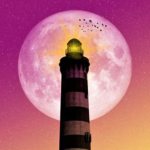
Frank, the first king of Narnia, was a cabby driver in our world. He was probably the last person that some people in our world would expect to become a king. But he and his wife Helen did have humility, which was was a trait that Aslan considered desirable. Lewis apparently thought that to transform humble people while retaining their humility was better than having overly conceited royalty inherit the throne. And evidently it worked since Frank and Helen were considered very fair and just king and queen. It is something like Caspian not feeling that he was ready for kingship at first, but he was feeling that he had a lot to learn from Aslan. That required some humility too, and to swallow one’s pride is not usually an easy thing.
Posted : December 18, 2025 1:21 am
DavidD and waggawerewolf27 liked
Forum Statistics
31
Forums
5,135
Topics
365.1 K
Posts
201
Online
2,390
Members
Latest Post: Everyone wants to talk weather Part 3 Our newest member: narniasuperfan222 Recent Posts Unread Posts
